
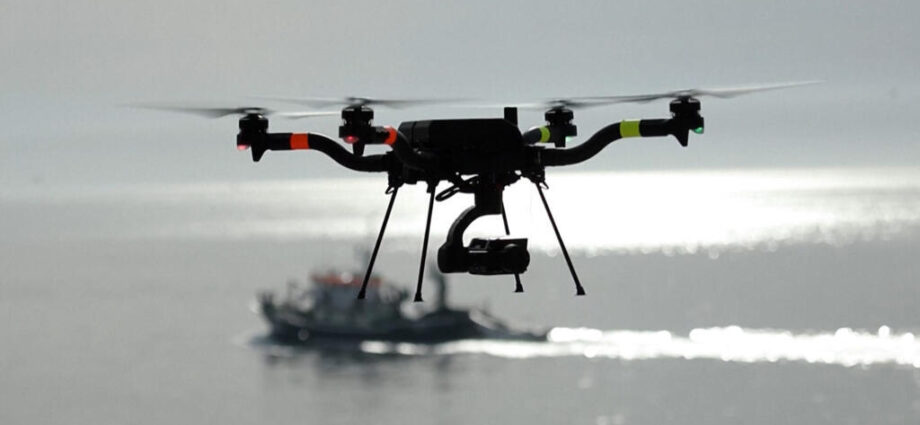
NATO’s North Atlantic Council has approved more than $40 billion in counter-drone spending over the next five years, announced in Ankara in early July under an initiative the alliance is calling “Drone Edge.” It’s one of the largest coordinated capability investments NATO has made in years, and it’s aimed squarely at a threat that conventional air defense was never built to handle efficiently: cheap, mass-produced drones.
The problem NATO is actually solving
Low-cost unmanned aircraft can conduct persistent surveillance and precision strikes against high-value, hard-to-defend targets — ammunition depots, airfields, logistics hubs — and doing so cheaply enough that the economics favor the attacker every time a nation responds with a traditional, expensive interceptor. That’s the same asymmetry driving Lockheed’s new low-cost PAC-3 ACE interceptor and the U.S. Navy’s CHAOS cruise-missile program. NATO’s answer is structural rather than purely technological: instead of 32 member states independently developing incompatible national counter-drone systems, Drone Edge is built around a NATO Counter-Drone Marketplace — a shared list of NATO-tested, NATO-compatible systems designed to let member nations procure faster and guarantee their systems can operate together in a real coalition fight.
The training bottleneck nobody talks about
Hardware isn’t the only constraint NATO is targeting. The alliance has set a goal of training five times as many drone operators by the end of 2027, using NATO Flight Training Europe to standardize procedures across multinational units. That detail matters more than it might look: a fleet of interoperable interceptor systems is only useful if enough trained personnel exist to operate it at the scale modern drone warfare demands, and workforce has quietly become as significant a bottleneck as hardware production capacity across Western militaries.
Where the money will actually go
Beyond the marketplace and training push, a major surveillance-drone acquisition contract will be managed centrally through the NATO Support and Procurement Agency, giving member states a pooled-procurement option rather than requiring each to run its own national tender. For counter-drone technology companies — sensor makers, electronic-warfare specialists, effector manufacturers — getting a system listed on the NATO marketplace is likely to become the single most valuable certification in the sector over the next five years, functioning as a fast lane into dozens of national defense budgets simultaneously rather than requiring a country-by-country sales campaign.
Comments are closed, but trackbacks and pingbacks are open.