
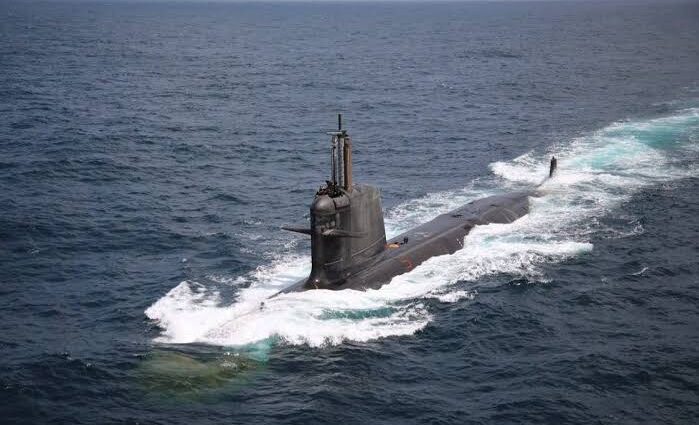
Argentina is weighing competing offers from Germany’s ThyssenKrupp Marine Systems (TKMS) and France’s Naval Group to build three new diesel-electric submarines for the Argentine Navy, according to this week’s Pleronix Weekly Defense Overview Report. Both European governments are reportedly prepared to finance the acquisition in full, underscoring how aggressively Berlin and Paris are competing for a foothold in South America’s submarine market.
Two Shipbuilders, Two Proposals
TKMS has put forward variants of its Type 209 family, while reporting on the competition indicates the German yard’s pitch centers on the Type 209/1400 and Type 214 designs rather than a wholly new “209NG” model. Naval Group, for its part, has offered its combat-proven Scorpene class alongside a diesel-electric derivative of its Barracuda design. Both companies build submarines already in service with multiple navies, giving Buenos Aires two technically mature options rather than a contest between unproven designs.
Financing as the Decisive Variable
Cost estimates for the program start at a minimum of $1.3 billion, with some Argentine defense analysts projecting the final bill could reach $1.5 billion or more once torpedoes, missiles, and integrated systems are included. Given Argentina’s constrained fiscal position, the willingness of both the French and German governments to act as financing sources and contract guarantors is likely to weigh as heavily on the outcome as the submarines’ technical merits. Whichever bidder offers the more favorable credit terms may hold a structural advantage independent of platform performance.
Rebuilding From Zero
The stakes for Argentina’s navy are considerable. The service has had no operational submarine since the ARA San Juan was lost with all 44 crew in November 2017. The ARA Santa Cruz has remained in an extended refit since 2014, and the ARA Salta is limited to static training duties. A contract for three new boats would therefore not merely modernize Argentina’s undersea fleet — it would reconstitute a capability the navy has effectively lacked for nearly a decade, restoring sea-denial and maritime deterrence options in the South Atlantic.
What This Means for Industry
For TKMS and Naval Group, the program represents a rare, fully-funded export opportunity in a submarine market where new orders are scarce and lead times are long. A win would also strengthen either company’s regional reference base in Latin America, a factor that typically carries weight in subsequent regional competitions. Reports suggest Argentina’s government intends to move toward technical and financial terms relatively quickly, so defense executives tracking the Southern Cone market should expect a decision timeline to firm up over the coming months. As with any pre-contract reporting, the final configuration, boat count, and financing structure remain subject to change until a deal is formally signed.
Comments are closed, but trackbacks and pingbacks are open.