
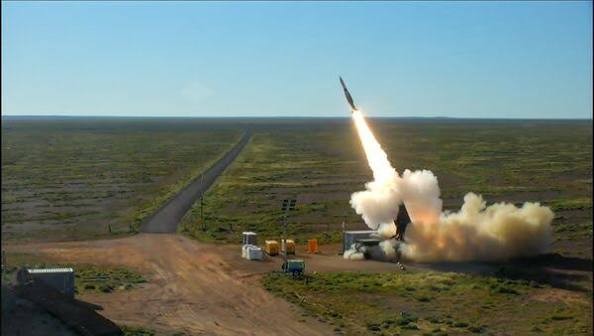
Australia’s Department of Defence has initiated Project Land 6504, a formal industry solicitation for a medium-range, ground-based air defense system, according to this week’s Pleronix Weekly Defense Overview Report. The solicitation, launched October 13, 2026, seeks a proven capability to strengthen Australia’s integrated air and missile defense network, with emphasis on intercepting ballistic missiles in their terminal phase and countering subsonic air-breathing threats.
A Proven System, Not a Development Program
Canberra has explicitly framed Land 6504 as a program seeking mature, fielded technology rather than a new development effort. The system must operate as part of a cohesive national air and missile defense architecture and integrate with Australian-made CEA Technologies radars and Lockheed Martin Australia’s Joint Air Battle Management System. The requirement to be expeditionary — deployable rather than fixed — further narrows the field toward systems with an established operational record.
A Compressed Timeline
Australia is targeting final vendor selection by the end of 2027, live-firing during Exercise Talisman Sabre in mid-2029, and initial operational capability in the early 2030s. Defense reporting on the program has flagged the schedule itself as a significant execution risk given the complexity typically associated with air and missile defense integration. To manage timeline risk, Canberra is pursuing both direct commercial sale and U.S. Foreign Military Sales channels in parallel, rather than committing to a single acquisition pathway.
A Crowded Field of Bidders
Interest is reportedly coming from vendors across Europe, Israel, South Korea, Turkey, and the United States. South Korea’s Hanwha has promoted its L-SAM system regionally, while Kongsberg Australia has signaled interest and floated adding AMRAAM-ER missiles to Australia’s existing NASAMS network as a lower-risk alternative to an entirely new system. Lockheed Martin Australia has also demonstrated a trailer-launched SM-2 capability, a move that leverages munitions and infrastructure Australia already operates. Given the breadth of interest, this is shaping into one of the more competitive air-defense tenders in the Indo-Pacific over the next two years.
Strategic Drivers and Industry Implications
The program is being driven primarily by China’s expanding military reach, including a People’s Liberation Army Navy task group that circumnavigated Australia in early 2025 and a Chinese intercontinental ballistic missile test into the South Pacific in July 2026. Australia’s 2026 National Defence Strategy has elevated missile defense as a funding priority, though analysts note that AUKUS nuclear-powered submarine spending continues to absorb a large share of available defense funds, creating budget competition for Land 6504. Separately, depleted U.S. missile stockpiles following the conflict with Iran may work in favor of non-American suppliers, since Foreign Military Sales delivery timelines carry additional risk under the program’s tight schedule. For air-defense manufacturers, Land 6504 represents a rare greenfield opportunity in a market where Western nations are otherwise mostly replenishing existing systems rather than fielding new architectures.
Comments are closed, but trackbacks and pingbacks are open.