
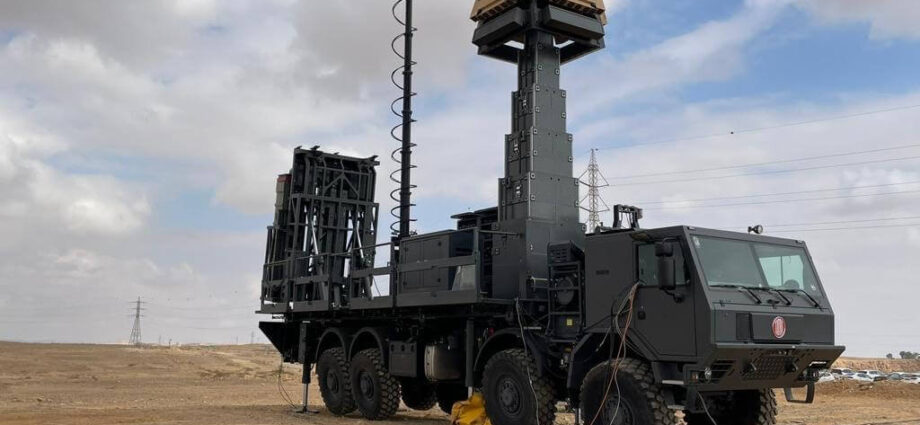
Greece’s Government Council for Foreign Affairs and Defense (KYSEA) has approved a defense package worth roughly €3.5–4.3 billion, centered on a new multi-layer air-defense system Athens is calling the “Achilles’ Shield.” Defense Minister Nikos Dendias announced the approval this week, and the headline detail will get noticed in boardrooms well beyond Athens: the backbone of the system comes not from a fellow NATO member, but from Israel’s Rafael and IAI.
The package folds together several capabilities into one procurement moment. Alongside the Achilles’ Shield radars and interceptors, Greece is adding three Embraer C-390 military transport aircraft, ten British-built VICTA mini-submarines, and a mix of American V-BAT and Israeli Heron unmanned aircraft. The government has set a 35-month timeline to reach full operational status, with a requirement that at least 25% of the system be manufactured domestically — a clause that matters as much to Greek industry as it does to the country’s air defenses.
Why this matters beyond Greece
Greece currently runs a patchwork of U.S. Patriot batteries and older Russian S-300 systems — a legacy mix that Athens has been trying to modernize for years. This purchase is not a one-off. It sits inside a roughly €28 billion modernization program running through 2036 that already includes up to 40 F-35 fighters and new frigates from France and Italy. Greece spends close to 3.5% of GDP on defense, well above the NATO average, a figure driven largely by long-standing tension with Turkey rather than the Ukraine-driven rearmament wave sweeping the rest of Europe.
For defense executives, the deal is a useful data point on where European air-defense budgets are actually flowing. Israeli systems — battle-tested against drone and rocket threats in ways few Western systems have been — are increasingly winning head-to-head competitions against incumbent NATO suppliers on cost and combat pedigree. Rafael and IAI have spent the past two years building out European sales and industrial-partnership channels, and a win of this size in a NATO member state is a marker other governments evaluating their own air-defense gaps will study closely.
There’s also a template question worth watching: the 25% local-production requirement mirrors a pattern showing up across European defense procurement, from Romania’s Airbus-Thales helicopter and radar deal to Poland’s earlier missile purchases. Governments are no longer satisfied writing a check for foreign hardware; they want technology transfer, local manufacturing jobs, and a domestic supply chain that survives the next crisis. Suppliers who structure offset and co-production packages well are winning; those who don’t are increasingly losing bids they might once have taken for granted.
The bigger picture: NATO’s southeastern flank is rearming fast, and it’s doing so with a more diversified supplier base than a decade ago. For companies and investors tracking European defense spending, Greece’s Achilles’ Shield is less a single contract than a signal of where that spending is heading next.
Comments are closed, but trackbacks and pingbacks are open.