
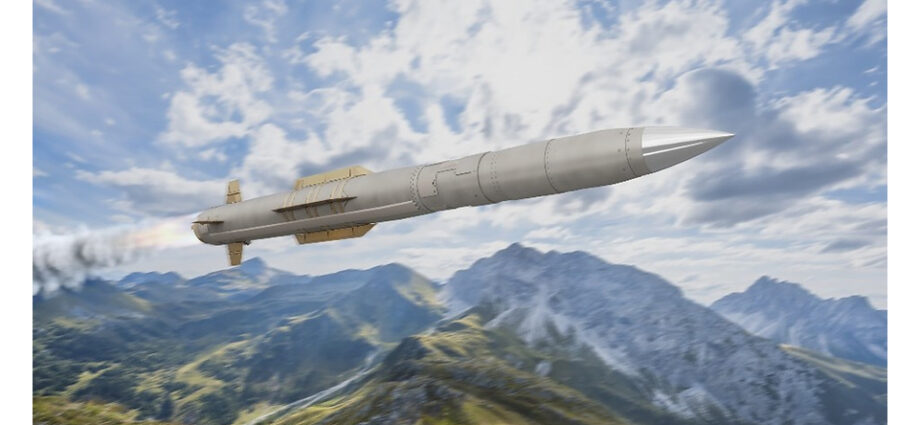
At the Farnborough Airshow this month, Lockheed Martin introduced the PAC-3 Adapted Capability Effector, or PAC-3 ACE — a new interceptor for the Patriot air-defense system that the company says will cost less than half as much as the current PAC-3 Missile Segment Enhancement (MSE) round. It’s a small-sounding engineering announcement that addresses one of the most consequential problems in modern air defense: the economics of shooting down cheap threats with expensive missiles.
The math that’s forcing this shift
A PAC-3 MSE interceptor costs on the order of $4 million. An Iranian Shahed-type drone, the kind that has been launched by the thousands in recent conflicts, costs roughly $35,000 to build. That’s more than a 100-to-1 cost mismatch, and it isn’t sustainable at scale — a lesson driven home hard during the recent U.S. operations against Iran, when American forces reportedly drew down interceptor stockpiles faster than they could be replenished. Lockheed has been explicit that PAC-3 ACE is a direct response to that experience: a lower-cost round designed for airbreathing threats — cruise missiles and short-range ballistic threats — that stays compatible with the Patriot systems and Integrated Battle Command System already fielded by dozens of countries.
Compatibility is the detail that matters most for existing Patriot operators, a list that includes the U.S., much of NATO’s eastern flank, Saudi Arabia, Japan, South Korea, and now Greece, whose new Achilles’ Shield package sits alongside its existing Patriot batteries. None of these operators need to buy new launchers or retrain crews from scratch to field ACE — it drops into inventory they already run, which is exactly the kind of low-friction upgrade path that tends to win fast adoption in defense procurement.
An industry-wide pivot, not a one-off product
Lockheed says initial production could be possible within roughly three years, and that development will be coordinated with American and European partners — a sign the company expects allied co-production and offset arrangements to be part of how ACE scales. That mirrors a broader trend visible across this year’s defense news: from BAE’s low-cost Brontanax drone concept to Pratt & Whitney’s new Valox engine family for autonomous systems, the industry is racing to build a lower tier of cheaper, faster-to-produce hardware that can absorb mass drone and missile attrition without draining budgets built for a smaller number of exquisite, expensive systems.
For defense executives and investors, the signal is less about Lockheed specifically and more about where margins and market share are likely to move next: toward whoever can field credible, cost-effective volume production fastest, rather than whoever builds the single most capable interceptor. Raytheon (an RTX business) and European primes including MBDA and Diehl will be watched closely for competing low-cost interceptor announcements in the coming months.
Comments are closed, but trackbacks and pingbacks are open.