
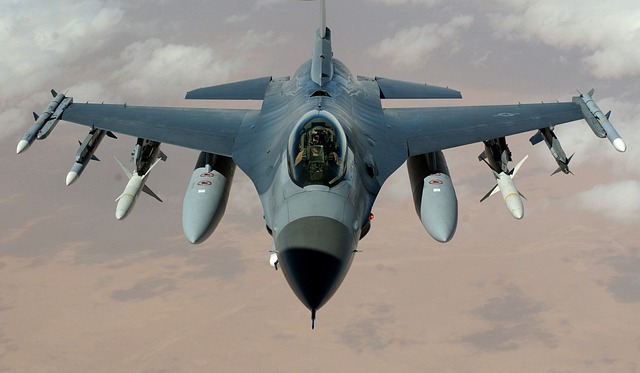
The Philippines is running one of the more closely watched fighter-jet competitions in the Indo-Pacific right now, and the shortlist reads like a who’s-who of the global combat aircraft industry: South Korea’s KF-21 Boramae, Lockheed Martin’s F-16, Dassault’s Rafale, the Eurofighter Typhoon, and Saab’s JAS-39 Gripen. Defense Secretary Gilberto Teodoro Jr. has confirmed all five are under active evaluation for the Philippine Air Force’s Multi-Role Fighter (MRF) program.
The numbers involved are modest by global standards — an initial buy of 12 to 20 aircraft, with a package including training, spares, and support systems valued at roughly $1 billion to $1.5 billion. But the program sits inside something much larger: Re-Horizon 3, a decade-long, approximately $35 billion modernization plan for the Armed Forces of the Philippines. Deliveries under the fighter program are targeted for 2027 to 2029.
Why South Korea has the inside track
On paper, the F-16 should be the safe, familiar choice, and the Rafale, Typhoon, and Gripen all bring proven combat pedigree. But recent reporting suggests the KF-21 has emerged as the frontrunner, and the reasons say a lot about how mid-sized air forces are making procurement decisions in 2026. The Philippine Air Force already flies twelve FA-50PH light combat aircraft built by KF-21 manufacturer KAI, which means a KF-21 buy plugs into an existing logistics and maintenance ecosystem rather than starting one from scratch. South Korea is also offering concessional financing, a faster production timeline than its Western competitors can currently match, and the prospect of a local maintenance facility in the Philippines.
No contract has been signed. But the direction of travel matters for anyone tracking global fighter-jet exports: South Korea has spent the past five years building a credible export business around the KF-21 and its lighter FA-50 sibling, and a win in the Philippines — a treaty-adjacent U.S. partner in a live South China Sea dispute — would be a significant proof point that Seoul can compete with Washington, Paris, London, and Stockholm on their own turf, not just in price-sensitive secondary markets.
The strategic backdrop
The urgency here isn’t abstract. The Philippine Air Force currently has no beyond-visual-range air combat capability able to sustain deterrence operations against a peer-level threat in contested waters — a gap that has become harder to ignore given the frequency of standoffs in the South China Sea over the past two years. Whichever aircraft wins, the deal will be read across the region as a signal of how fast Manila is willing to move, and how it’s willing to balance its traditional alignment with Washington against pragmatic deals that get capable aircraft into service faster and cheaper.
For manufacturers and their supply chains, the outcome is worth tracking closely: a KF-21 win would validate South Korea’s export strategy for other Indo-Pacific and Middle Eastern prospects currently evaluating the same aircraft, while a Western win would suggest financing and offset packages can still out-compete Seoul’s speed-to-delivery pitch.
Comments are closed, but trackbacks and pingbacks are open.