
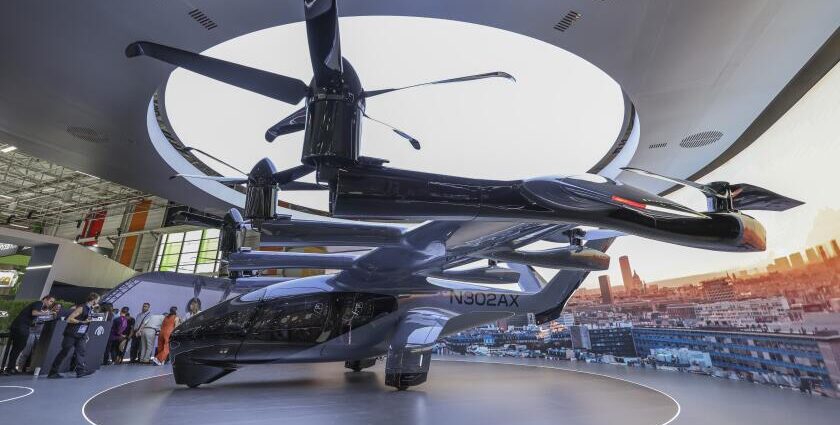
Archer Aviation has signed definitive agreements to acquire three Boeing subsidiaries — Wisk Aero, Insitu, and SkyGrid — in an all-stock transaction that hands Boeing close to a 20% stake in Archer, along with up to $55 million in additional near-term funding and warrants covering a further $200 million. It’s a significant repositioning for a company that, five years ago, was a pre-revenue eVTOL startup, and it’s an equally significant signal about which parts of its portfolio Boeing has decided it no longer needs to own outright.
What Archer is actually buying
Each of the three subsidiaries brings a distinct capability. Wisk Aero contributes autonomous flight technology and years of certification-focused engineering work on self-flying aircraft, giving Archer a deep bench of autonomy talent right as it ramps production of its own hybrid-electric drone, developed in partnership with Anduril Industries, for military applications. Insitu brings an established, combat-proven unmanned aircraft business with a long history of Pentagon contracts — instant defense-sector credibility and an existing customer relationship that would otherwise take Archer years to build from scratch. SkyGrid rounds out the acquisition with airspace-management and traffic-deconfliction software, the kind of infrastructure layer that becomes increasingly necessary as autonomous aircraft, whether air taxis or military drones, start sharing the same skies at scale.
Why Boeing is keeping a stake instead of a clean divestiture
Boeing isn’t simply exiting these businesses — it’s retaining upside through equity while shedding day-to-day operational responsibility, and it has secured a cross-licensing arrangement giving it continued access to Wisk’s autonomous flight technology for its own current and future commercial and defense aircraft programs. That structure lets Boeing benefit from Archer’s faster, more focused execution on autonomy and eVTOL technology without the capital drag of running three separate subsidiaries that sat outside its core commercial aircraft and defense manufacturing business. It’s a pattern increasingly common among large primes: rather than starving smaller, faster-moving units of investment inside a big-company structure, spin them into a focused player and take equity instead of full ownership.
The bigger strategic shift this represents
For Archer, the deal is a genuine inflection point. A company known primarily for its Midnight air-taxi program now controls a combat-tested unmanned aircraft business, autonomous flight software with real certification history, and airspace-management infrastructure — the full stack needed to credibly compete in military autonomy, not just urban air mobility. Combined with its existing collaboration with Anduril on a hybrid-electric military drone, Archer is positioning itself as a genuine defense-technology player rather than a civilian aviation startup with a side interest in government contracts.
For the wider industry, the deal is worth watching as a template. Large defense and aerospace primes are increasingly willing to carve out their autonomy and unmanned-systems units into independently run, faster-moving companies — retaining an equity stake and licensing rights rather than the full operational burden. Expect other legacy primes sitting on similarly under-leveraged autonomy assets to explore comparable structures over the next 12 to 18 months, particularly as competition intensifies around collaborative combat aircraft, loyal-wingman drones, and the broader shift toward AI-piloted systems that dominated this year’s Farnborough Airshow announcements.
Comments are closed, but trackbacks and pingbacks are open.